

As a business, providing the best possible experience for your customers will be at the forefront of your goals.
However, while every business wants good customer feedback, one of the most critical ratings that your business will receive is its food hygiene rating.
This can be make or break for hospitality businesses. Not only does this score ensure regulatory compliance, but it can (if you score highly) significantly improve your reputation, and the trust your customers have in you.
So, if you have a food hygiene rating assessment coming up, keep reading. Below, our commercial cleaning experts have shared their top tips for improving your food hygiene rating.
What is the Food Hygiene Rating Scheme?
The Food Hygiene Rating Scheme (FHRS) is run in England, Wales and Northern Ireland. It is an initiative conducted by local authorities, in partnership with the Food Standards Agency (FSA). Participation in this scheme is compulsory in England, Wales and Northern Ireland (Scotland has a slightly different system, called the Food Hygiene Information Scheme).
The scores are awarded to any business that sells, prepares or serves food to the public. In order to assign these scores, an unannounced inspection of the business takes place, after which the inspector determines the score.
The initiative works to maintain high public health, and maintain high compliance with government food preparation, storage and serving requirements.
At the same time, the scheme also gives customers better access to information about the food businesses they are buying from. It gives them a clear, immediately comparable point of reference for a businesses’ hygiene, cleanliness, food safety and management. In turn, this accountability and transparency encourages low-scoring food businesses to improve their standards, quickly.
Understanding the rating scale
Once the inspection has been completed, the business is given a rating, from 5 to 0.

The meaning of these scores are as follows:
- 5 – Hygiene standards are very good.
- 4 – Hygiene standards are good.
- 3 – Hygiene standards are generally satisfactory.
- 2 – Some improvement is necessary.
- 1 – Major improvement is necessary.
- 0 – Urgent improvement is required.
These scores are assigned based on three key factors:
- How the food is handled – Including the hygiene standards during the food’s preparation, cooking, reheating, cooling and storage.
- The condition of the premises – Including the overall site cleanliness, layout, ventilation, maintenance, facilities and pest control, among others.
- The management and documentation of food safety – Including regulatory compliance, staff training, record keeping, and whether any advice from previous inspections has been acted on.
How can a business improve its food hygiene rating?
If you want to improve your existing score, or ensure a good score for an upcoming inspection, here are the key steps that we’d recommend you take.
Look through your last inspection report
Go through your previous report thoroughly, paying particular attention to any complaints or shortcomings that the inspector pointed out. Ensure you have done everything you can to resolve these issues. Then, document the changes that you made in detail, and include evidence of the changes you made.
Implement strict cleaning regimes
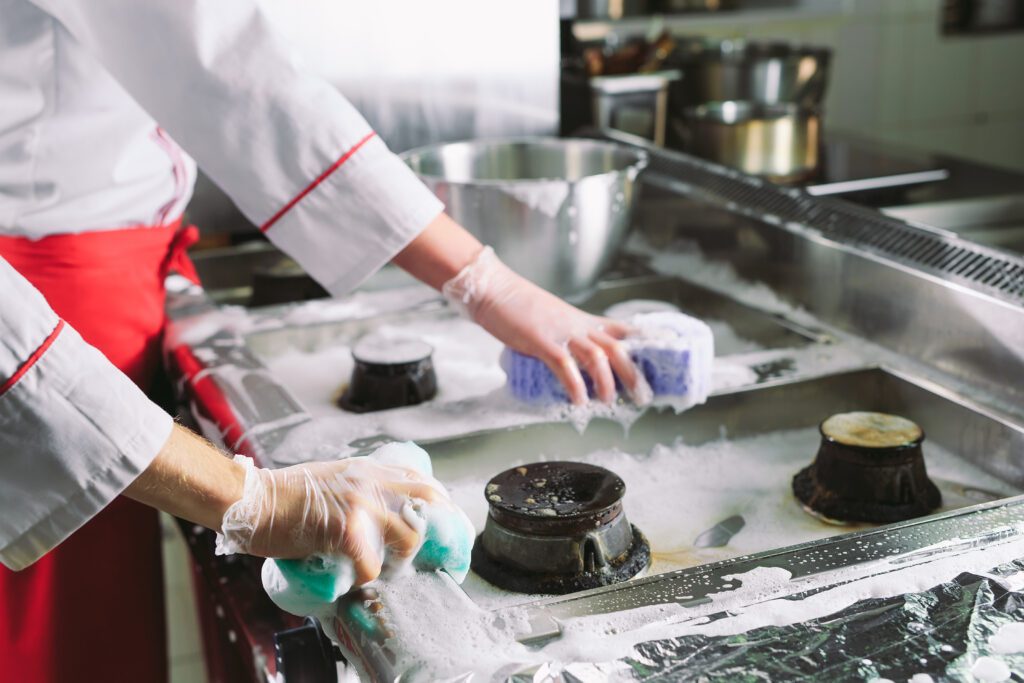
Make sure your premises has strict cleaning routines in place, which all of your staff are familiar with. This should include surfaces / areas to disinfect regularly, and using the right cleaning chemicals and methods for each area of your site.
Minimise the risk of cross-contamination
You should be employing best practice approaches to physically separate raw and cooked foods, like colour-coded chopping boards and equipment, and separate storage / refrigeration areas. You should also ensure that you’re using correct temperature controls when storing, cooking and reheating foods.
Make improvements to your premises
Go through the site, and check for any damage to floors, walls, ceilings or worktop surfaces. Repair any issues, wherever possible. Make sure that your workspaces are well organised, and not too cluttered. Check that your ventilation and hand-washing facilities are in good working order.
Consider your staff training
Think about the staff training that you currently have in place. Is it sufficient? Do you have refresher training sessions scheduled at regular intervals? Training should also cover personal hygiene (e.g. hand-washing, tying hair back, wearing minimal jewellery).
Maintain clear documentation
Keep thorough records of all the work that you are doing to maintain high cleaning standards. This should include staff training, cleaning schedules, inspections, improvements and your daily regimes. You could even conduct ‘mock’ inspections in between official inspections, to test yourself and your staff. If you do this, make sure you document it, too.
Enlist a professional commercial cleaning company
By working with a commercial cleaning company, you can arrange regular cleans – at a time frame that suits you – to be completed by professional cleaners. This is a fantastic way to ensure your site undergoes thorough top-to-bottom cleans, completed by specialists with a thorough understanding of cleaning regulations and best practices.
At JMS Cleaning Services, we work with businesses across the country to implement a dependable cleaning schedule, and help them improve their food hygiene rating. To find out more about how we can support your business, don’t hesitate to get in touch.